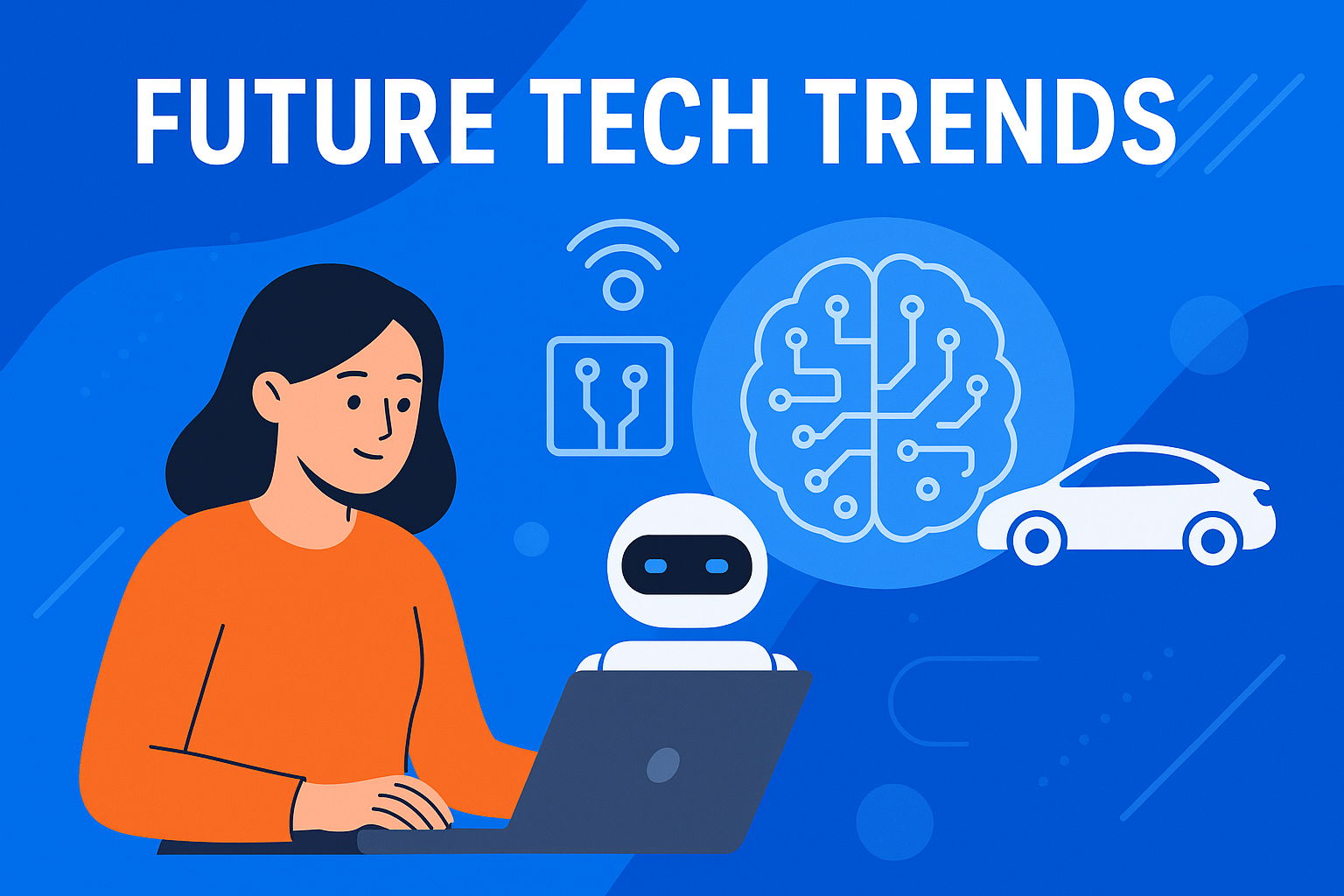
Future Tech Trends: The Breakthrough Innovations Transforming Our Digital World
Technology is evolving at a pace the world has never experienced before. Every year brings forward new breakthroughs that reshape how we work, learn, communicate, and live. In 2025, the digital world is undergoing a massive transformation fueled by artificial intelligence, automation, advanced communication systems, and emerging technologies that were once considered futuristic dreams. These innovations are not only enhancing convenience but also redefining industries, economies, and societies.
This article explores the most important future tech trends and breakthrough innovations that are driving the next wave of digital transformation.
1. Artificial Intelligence Becomes the Brain of the Digital World
Artificial intelligence (AI) is no longer a supporting tool—it is now the central force behind modern technology. In 2025, AI has evolved into a powerful ecosystem that influences almost every sector.
Generative AI for Everyday Use
Generative AI tools can now write, design, analyze data, translate languages, and generate multimedia content. Businesses use them to create marketing materials, automate workflows, and improve communication. Students use AI to learn faster, and developers use it to build applications more efficiently.
AI in Business and Industry
Companies rely on AI systems to:
- Predict market trends
- Optimize supply chains
- Enhance customer service
- Improve decision-making
- Reduce operational costs
This shift makes organizations more agile and capable of responding quickly to economic changes.
AI-Powered Personalization
AI analyzes user preferences and behavior to deliver personalized experiences in:
- Shopping
- Entertainment
- Education
- Healthcare
This level of personalization increases satisfaction and efficiency, transforming daily life.
2. Quantum Computing Breakthroughs: Solving the Impossible
Quantum computing is one of the biggest technological advancements of the decade. While traditional computers perform calculations step by step, quantum computers can process information simultaneously, making them thousands of times faster for certain tasks.
What Quantum Computers Can Do
Quantum computers help solve problems such as:
- Drug discovery
- Climate modeling
- Financial forecasting
- Cybersecurity enhancements
- Complex scientific simulations
Researchers predict that quantum computing will eventually revolutionize industries that rely heavily on data and computation.
Impact on Cybersecurity
Quantum technology can break traditional encryption methods. As a result, companies and governments are developing quantum-safe cryptography to protect sensitive information.
3. The Rise of Hyper-Connected Networks and 6G Technology
While 5G continues expanding globally, the world is preparing for 6G, which promises even faster speeds and smarter connectivity.
What Will 6G Bring?
- Download speeds up to 100 times faster than 5G
- Ultra-low latency for real-time communication
- Enhanced connectivity for smart cities
- Support for billions of IoT devices
6G will make immersive virtual reality, massive AI implementations, and autonomous technologies much more efficient.
Smarter IoT Integration
The Internet of Things (IoT) is becoming more intelligent. Devices in homes, hospitals, factories, and cities communicate in real time, creating powerful digital ecosystems that improve efficiency and control.
4. Robotics and Automation Transforming the Workforce
Robots are rapidly becoming an essential part of daily operations in various industries.
Automation in Business
Robots now handle tasks such as:
- Warehouse packaging
- Product assembly
- Quality inspection
- Delivery operations
This reduces labor costs and increases speed while allowing employees to focus on innovation and creativity.
Service Robots in Daily Life
Hotels, restaurants, hospitals, and public buildings use service robots for:
- Room deliveries
- Cleaning
- Medical assistance
- Reception services
Combined with AI, robots can interact naturally with people, helping businesses improve customer experiences.
Collaborative Robots (Cobots)
Cobots work alongside humans safely. They enhance productivity in offices, factories, and labs while supporting human decision-making.
5. Extended Reality (XR): Blending the Digital and Physical Worlds
Extended Reality—an umbrella term for VR (Virtual Reality), AR (Augmented Reality), and MR (Mixed Reality)—is transforming entertainment, education, and business.
Practical Uses of XR
- VR classrooms for virtual learning
- AR navigation tools
- MR workspaces for remote collaboration
- Virtual product testing for businesses
These technologies make experiences more immersive, interactive, and engaging.
Impact on Entertainment
From gaming to movies, XR provides next-level storytelling and immersive environments. Users can explore 3D worlds, interact with characters, and enjoy realistic simulations.
6. Blockchain Evolution: Beyond Cryptocurrency
Blockchain is expanding far beyond digital currency. Its secure, transparent, and decentralized system is being used in many sectors.
Blockchain in Finance
Banks and fintech companies use blockchain for secure and faster transactions. It reduces fraud, improves transparency, and lowers transfer fees.
Smart Contracts
Smart contracts automatically execute actions when conditions are met. They help manage:
- Real estate agreements
- Supply chain operations
- Insurance claims
- Legal documentation
Digital Identity Protection
Blockchain offers a new method of protecting personal identity by giving users more control over their data.
7. Biotechnology and Health Innovation
Future tech trends include not only digital advancements but also innovations in biology and healthcare.
Genetic Engineering and Personalized Medicine
Scientists use advanced computing and DNA analysis to create personalized medicine tailored to individual genetic profiles. This makes treatments more effective and reduces side effects.
Smart Health Devices
Modern wearables monitor:
- Heart rate
- Blood pressure
- Sleep patterns
- Blood sugar
- Stress levels
AI then analyzes this data to provide health recommendations or alert doctors.
Telehealth and AI Diagnosis
Telehealth services continue to grow, offering virtual consultations and AI-assisted diagnosis. This saves time and increases healthcare accessibility.
8. Autonomous Vehicles and Smart Transportation
Transportation is undergoing a smart revolution.
Self-Driving Cars
Autonomous vehicles rely on sensors, cameras, and AI to navigate roads safely. They reduce accidents, improve traffic flow, and offer more convenient travel experiences.
Smart Traffic Systems
Cities use AI to monitor traffic and reduce congestion. Traffic lights adjust automatically based on road conditions, making transportation faster and more efficient.
Electric Vehicle Growth
Electric vehicles (EVs) are becoming the global standard thanks to improved battery technology, lower prices, and more charging stations.
9. Sustainable Technology for a Greener Future
Sustainability is one of the biggest priorities of modern innovation.
Renewable Energy Breakthroughs
Solar panels, wind turbines, and next-gen batteries are becoming more efficient and affordable. Countries invest heavily in renewable energy to reduce carbon emissions.
Smart Agriculture
AI-powered drones, automated irrigation, and sensors help farmers grow more food with fewer resources. Smart agriculture improves sustainability and food security.
Carbon Capture Technology
Advanced machines now capture and store carbon dioxide, reducing pollution and helping fight climate change.
10. The Future of Work: Smarter, Flexible, and Highly Digital
Technology continues to transform the workplace.
Remote Work Becomes Permanent
Cloud platforms, AI collaboration tools, and VR meetings make remote work more efficient. Many companies now operate hybrid systems.
Digital Skills Become Essential
Jobs increasingly require digital literacy. AI, automation, and data analytics skills are becoming the new standard.
AI-Augmented Employees
AI tools enhance productivity by automating repetitive tasks and providing real-time insights that support decisions.
Conclusion: A Digital Future Full of Opportunity
The world is entering an era where technology is not just a tool—but a powerful driver of progress. From artificial intelligence and quantum computing to robotics, blockchain, and biotech innovations, future tech trends are redefining how society operates.
These breakthrough innovations promise a world that is more connected, more efficient, and more sustainable. As these technologies continue to evolve, they will unlock new opportunities and shape a digital future filled with endless possibilities.