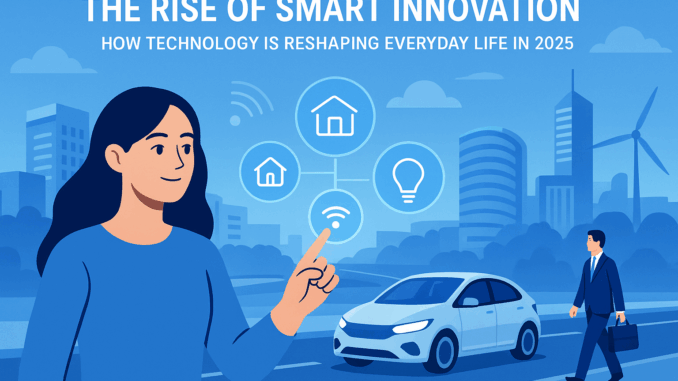
The Rise of Smart Innovation: How Technology Is Reshaping Everyday Life in 2025
In 2025, technology is no longer something we “use.” It has become something that lives with us, learns from us, and works alongside us. From AI-powered personal assistants to hyper-connected homes and workplaces, smart innovation is transforming the way people live, communicate, travel, shop, and make decisions. This rapid evolution is not only improving convenience and efficiency, but it is also redefining expectations for the future.
As digital transformation reaches every corner of society, 2025 represents a turning point—a year when smart technology becomes an invisible partner in daily life. This article explores how these innovations reshape our routines and what the future might look like beyond 2025.
1. Smart Homes That Understand Their Owners
Today’s smart homes provide more than remote-controlled lights or voice-activated music. In 2025, they are intelligent ecosystems capable of learning user behavior and adjusting themselves automatically.
AI-Driven Personal Assistants
Modern smart assistants analyze routines—wake-up times, lighting preferences, daily schedules—and optimize decisions without manual input. They can:
- Adjust lighting based on mood and time of day
- Suggest meals based on nutrition goals
- Manage heating and cooling to save energy
- Remind users of tasks, appointments, or medication
These assistants communicate with multiple devices, creating seamless automation. Homeowners no longer need to “program” smart homes; the homes learn naturally.
Energy-Efficient Automation
Smart energy meters and connected appliances help families reduce electricity consumption. Refrigerators track food inventory and provide expiration alerts, ovens preheat when needed, and solar-powered systems optimize energy use in real time. This leads to both financial savings and a reduced environmental footprint.
Enhanced Home Security
Security systems now integrate AI-based facial recognition, behavior analysis, and predictive alerts. Doors unlock for trusted people, cameras distinguish between pets and strangers, and smart alarms notify homeowners instantly via their smartphones.
2. Smarter Healthcare: From Telemedicine to AI Diagnosis
Healthcare in 2025 is dramatically more advanced, personalized, and accessible due to smart innovation.
Remote Health Monitoring
Wearable devices monitor heart rate, sleep quality, oxygen levels, blood sugar, and other health metrics. These wearables sync with mobile apps and send real-time updates directly to healthcare professionals.
Doctors can detect potential health risks early, reducing emergency situations. Patients with chronic conditions receive continuous care without constant clinic visits.
AI-Powered Diagnosis
Artificial intelligence now assists medical experts by:
- Analyzing medical scans faster than traditional methods
- Detecting disease patterns with high accuracy
- Suggesting personalized treatment plans
- Predicting long-term risks from lifestyle behavior
AI does not replace doctors—it enhances their ability to diagnose earlier and more precisely.
Telemedicine as a Standard
Since the pandemic years, telemedicine has evolved to become a normal practice. Video consultations, digital prescriptions, and virtual therapies make healthcare more accessible for people in remote areas.
3. Smart Cities: Efficient, Sustainable, and Connected
Technology-driven cities are becoming the standard around the world. By 2025, many major cities have implemented smart systems to improve urban living.
Smart Traffic and Transportation
Cities now use AI and sensor-based systems to manage traffic, reduce congestion, and improve road safety. Key innovations include:
- Real-time traffic light optimization
- AI-guided public buses
- Smart parking systems that show available spaces
- Autonomous delivery carts and robots
Commuting is becoming smoother, faster, and more energy-efficient.
Sustainable Energy Management
Smart grids monitor electricity demand, optimize energy distribution, and quickly respond to outages. Buildings use intelligent systems to regulate power consumption, reducing waste and carbon emissions.
Digital Government Services
Citizens can access essential services—tax filing, IDs, permits, appointments—through centralized digital platforms. This reduces waiting times and increases government transparency.
4. The Transformation of Work Through Smart Innovation
Workplaces in 2025 are deeply influenced by automation, AI, and remote work technology.
AI-Powered Workflows
AI tools now handle repetitive tasks such as data entry, report generation, customer support responses, and scheduling. This allows employees to focus on creativity, strategy, and decision-making.
Hybrid Work as the New Normal
Smart platforms support live collaboration, real-time project tracking, and cloud-based workflows. Companies provide VR meeting rooms, advanced video conferencing, and shared digital workspaces.
Upskilling and Smart Learning Tools
Workers use personalized learning platforms that adjust training based on progress. AI tutors recommend courses, track improvements, and simulate real-world scenarios for skill development.
5. Smart Shopping and Digital Consumer Experiences
Retail shopping is now a blend of physical and digital experiences.
AI-Driven Personalization
E-commerce platforms use AI to recommend products based on browsing behavior, purchase history, and personal preferences. This delivers a more tailored shopping experience.
Automated Stores
Contactless stores allow customers to walk in, pick up items, and walk out—payment is processed automatically using sensor and camera technology.
Virtual Try-Ons
AR (Augmented Reality) lets shoppers test products virtually:
- Try on clothes
- View furniture in their homes
- Preview paint colors on walls
- Test makeup shades
This reduces returns and improves satisfaction.
6. Smart Transportation: Electric, Autonomous, and Connected
Transportation in 2025 is cleaner, safer, and more intelligent.
Electric Vehicles (EVs) Become Mainstream
Charging stations are widely available, smart grids optimize charging times, and EVs are cheaper to maintain. Governments around the world promote EV adoption through incentives.
Autonomous Vehicles
Self-driving cars continue to advance, using AI sensors to detect obstacles, navigate traffic, and prevent accidents. Autonomous taxis and buses are being tested in major cities.
Connected Vehicle Systems
Modern vehicles communicate with each other and with road infrastructure. This helps:
- Reduce accidents
- Optimize routes
- Alert drivers to hazards
- Improve traffic flow
7. AI in Entertainment: Personalized and Immersive Experiences
The entertainment industry has also embraced smart innovation.
Personalized Streaming
Streaming platforms analyze viewing habits to create custom movie and music recommendations. AI can even generate personalized playlists or highlight clips of a user’s favorite content.
Gaming Innovation
VR headsets, motion tracking, and cloud gaming allow people to play immersive games without expensive hardware. Realistic simulations create interactive adventures previously impossible.
Smart Content Creation
Content creators use AI tools for editing, animation, sound enhancement, and script generation, significantly speeding up production.
8. The Rise of Smart Finance and Digital Payments
Financial technology in 2025 is fully integrated into everyday life.
Contactless and Mobile Payments
Most transactions happen digitally through mobile wallets, QR codes, and NFC devices. Cashless transactions are faster, safer, and more convenient.
AI-Based Financial Planning
Banks and fintech platforms use AI to:
- Analyze spending habits
- Provide budgeting recommendations
- Predict investment opportunities
- Detect fraud more efficiently
Blockchain and Security
Blockchain technology enhances digital security by decentralizing data and preventing unauthorized access, making digital payments more reliable.
9. The Challenges of Smart Innovation
Despite the many benefits, smart technology brings challenges that society must address.
Privacy Concerns
As devices collect personal data, concerns about misuse or data leaks continue to grow. Stronger privacy laws and transparent data policies are crucial.
Digital Divide
Not everyone has access to advanced technology. Bridging the gap between urban and rural communities is essential for inclusive growth.
Overdependence on Technology
Heavy reliance on automation may reduce critical thinking and physical activity. Finding balance remains important.
Conclusion: A Future Shaped by Smart Innovation
2025 marks a significant milestone in the rise of smart innovation. Technology is reshaping almost every aspect of daily life—how people live, travel, work, shop, and take care of their health. From smart homes and AI-powered healthcare to autonomous transportation and digital finance, smart innovation enhances convenience, raises productivity, and paves the way for a sustainable future.
As society continues to embrace these advancements, the key will be managing the challenges of privacy, accessibility, and ethical responsibility. With thoughtful adoption, smart innovation will not only reshape 2025—it will define the future of modern living for decades to come.